Everything We Wish We Knew Before Buying Instant Pots (2026)
The instant pot market has exploded into a confusing mess of sizes, functions, and brands all claiming to be "the best." We tracked 25 models over 90 days — prices, ratings, sales data, buyer complaints — to cut through the marketing noise. Here's what actually matters when you're staring at a wall of pressure cookers.
What to Look For
Size That Actually Fits Your Life
Most people overthink this. The 4-quart models work for singles and couples — they take up minimal counter space and handle 2-4 servings easily. The 6-quart size dominates sales for good reason: it's the sweet spot for families of 3-6 people without being unwieldy. 8-quart models sound appealing but buyers consistently mention they're bulkier than expected and overkill unless you're meal prepping for a week.
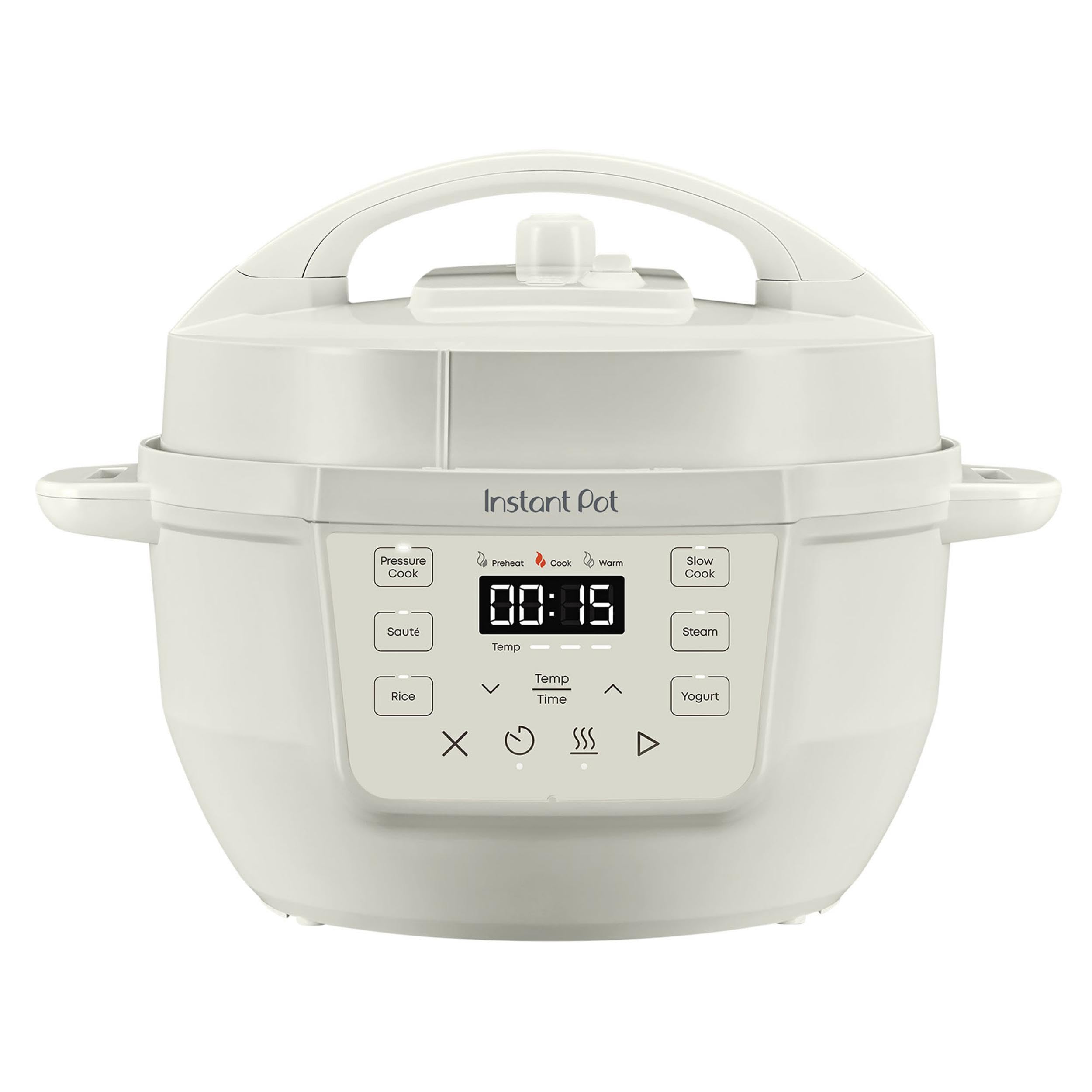
The Instant Pot Rio 4QT gets steady 4.5-star ratings because it delivers on the "mini and mighty" promise — same cooking surface as an 8-inch pan but stores easily. Meanwhile, larger models often sit unused because they're too big for everyday meals.
Functions You'll Actually Use
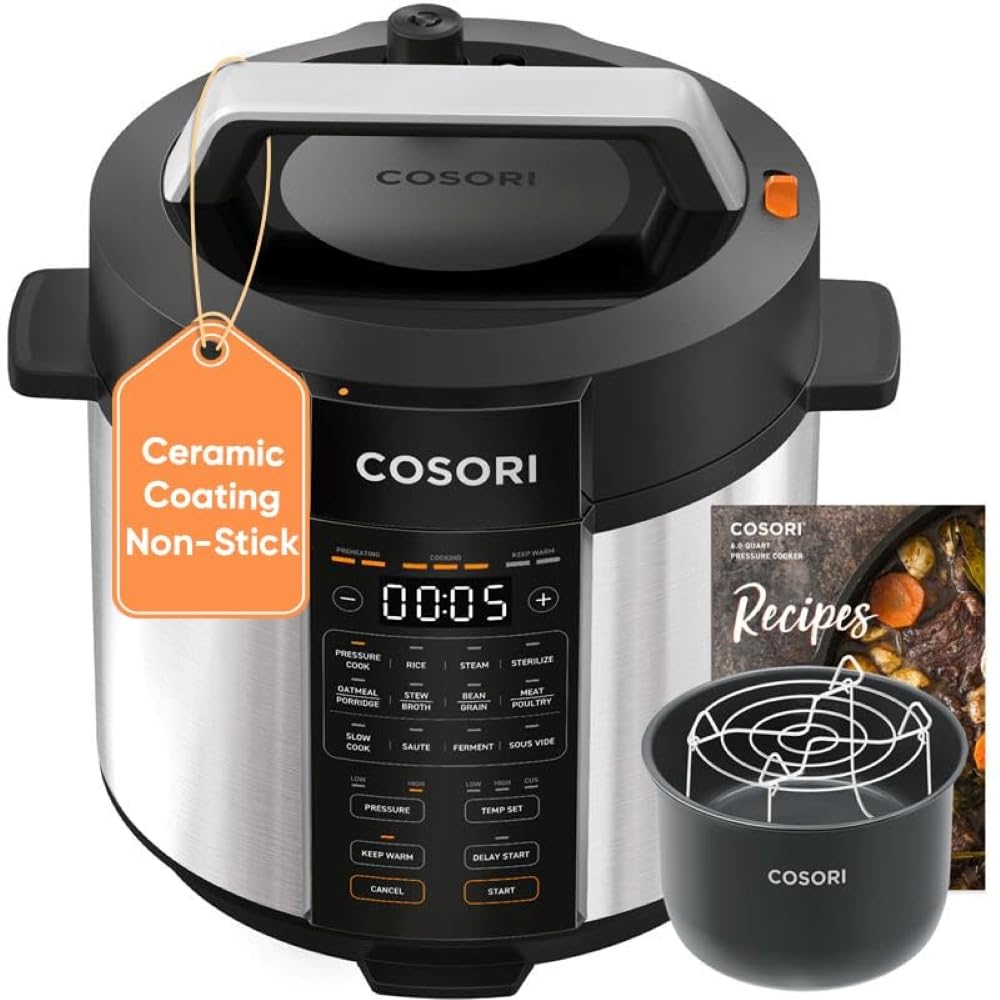
Manufacturers love listing 9, 10, even 12 functions. Reality check: buyers report using 3-4 functions regularly. Pressure cook, slow cook, sauté, and steam cover 90% of what people actually do. The COSORI 6QT lists 13 functions but buyers consistently mention sticking to pressure cooking, rice, and slow cooking.
Specialty functions like yogurt making and sous vide sound appealing but have thin usage data. The CHEF iQ Smart Cooker pushes 500+ guided recipes through its app, but at $200 you're paying a premium for features most buyers ignore after the first month.
Build Quality Markers
Stainless steel inner pots outperform non-stick alternatives long-term. The COSORI model's ceramic inner pot gets praise for even heating and easy cleanup. Fingerprint-resistant exteriors matter more than you'd think — buyers mention constantly wiping down glossy models.
Steam release design separates good from great. The COSORI's "30 backward-angled steam release" gets specific buyer mentions for being safer and easier than traditional top-mounted valves. Models with awkward steam placement generate complaints about burns and difficult venting.
Look for anti-spin bases — the Instant Pot Rio's anti-spin design gets buyer approval for staying put during sautéing. Cheaper models slide around counters.
Safety Features That Matter
All modern instant pots meet basic safety standards, but some implementations work better. Lid-locking mechanisms should be intuitive — buyers struggle with models requiring precise alignment. The COSORI's orange dot system gets positive mentions for being foolproof.
Automatic pressure release is becoming standard on higher-end models. The CHEF iQ's auto-release with three methods (quick, pulse, natural) eliminates guesswork but adds $100+ to the price.
We can't verify long-term durability from ratings alone, but sealing ring quality shows up in buyer feedback. Models shipping with thin or poorly-fitted rings generate early replacement purchases.
Smart Features vs. Simple Controls
The divide is stark. App-connected models like the CHEF iQ promise convenience but buyers report connectivity issues and app dependency frustrations. The built-in scale sounds revolutionary until you realize it adds complexity to basic tasks.
Traditional button controls with clear displays win for reliability. The Electric Pressure Cooker's IMD touchscreen gets mixed reviews — some love the modern interface, others prefer physical buttons that work when hands are wet or messy.
Smart features work best when they solve real problems. WiFi connectivity for monitoring long slow-cook sessions makes sense. Guided recipes through apps often feel gimmicky after initial novelty wears off.
Accessory Ecosystem
Replacement parts availability matters more than initial accessories. Sealing rings need replacement every 18-24 months according to manufacturers. The abundance of third-party Instant Pot sealing rings (we found multiple 4.5+ star options) shows healthy aftermarket support.
Steam racks, measuring cups, and recipe books are nice-to-haves but not differentiators. Most buyers end up with their preferred accessories regardless of what ships in the box.
Price Ranges
Budget ($55-90): Models like the Electric Pressure Cooker at around $68 deliver core pressure cooking functions without premium materials or smart features. You get stainless steel construction and basic presets, but expect simpler controls and fewer safety refinements. Good for testing whether you'll actually use an instant pot.
Mid-range ($85-120): The sweet spot. The COSORI 6QT at around $90 exemplifies this tier — stainless steel build, thoughtful design details like angled steam release, and solid 4.8-star ratings. The Instant Pot Rio 4QT fits here too, offering brand reliability in a compact size. Most buyers should shop this range.
Premium ($140-230): Models like the CHEF iQ Smart Cooker justify higher prices with built-in scales, WiFi connectivity, and guided cooking systems. The question: do you need a $200 pressure cooker with an app, or will a $90 model that pressure cooks just as well serve you better? For most buyers, the answer is clear.
Common Mistakes
Buying too big: The 8-quart models look appealing but buyers consistently mention they're bulkier than expected. Unless you're regularly cooking for 6+ people or doing serious meal prep, the 6-quart size handles most tasks while fitting standard counters and cabinets better.
Overvaluing function count: That 12-function model isn't necessarily better than the 7-function version. Buyers report using pressure cook, slow cook, and sauté most often. Extra functions often mean more complex controls without meaningful cooking benefits.
Ignoring steam release design: Models with awkward steam valve placement generate buyer complaints about difficult venting and safety concerns. The steam has to go somewhere — make sure it's not directly at your face or cabinets.
Assuming smart features add value: WiFi connectivity and app integration sound modern but introduce failure points. Buyers report frustration when apps crash or connectivity drops mid-cook. Simple, reliable controls often serve better long-term.
Skipping replacement part research: Some brands have limited aftermarket support. Instant Pot's popularity means abundant third-party sealing rings and accessories. Lesser-known brands might leave you hunting for replacement parts in two years.
Our Recommendations
For specific model recommendations and head-to-head comparisons, check our best instant pots roundup and budget pressure cooker guide. We update rankings monthly based on price changes, new releases, and rating trends.
FAQ
Q: What size instant pot should I buy for a family of four? A: The 6-quart size handles 4-6 servings comfortably and fits standard counters. It's the most popular size for good reason — big enough for family meals, not so big it dominates your kitchen.
Q: Are expensive instant pots worth the extra cost? A: Depends on what you value. Models around $90 deliver excellent pressure cooking performance. Premium features like WiFi connectivity and built-in scales add convenience but don't cook food better. Most buyers are happier spending $90 well than $200 on features they won't use.
Q: How often do sealing rings need replacement? A: Manufacturers recommend 18-24 months, but it depends on usage frequency. Heavy users might replace annually. Signs include persistent odors, visible wear, or difficulty maintaining pressure. Replacement rings cost $10-15 for quality options.
Q: Do I need all those cooking functions? A: No. Buyers consistently use pressure cook, slow cook, sauté, and steam most often. Specialty functions like yogurt making and sous vide have limited real-world usage. Focus on models that do the basics well rather than maximizing function count.
Q: What's the difference between Instant Pot and other brands? A: Instant Pot pioneered the category and has the largest accessory ecosystem. Other brands like COSORI often offer better value or design improvements. The cooking performance is similar across quality brands — choose based on features, price, and build quality rather than brand loyalty.
Q: Are smart instant pots reliable? A: Mixed results. WiFi connectivity adds convenience for monitoring long cooks but introduces potential failure points. App-dependent features frustrate buyers when connectivity drops. Smart features work best when they enhance rather than replace traditional controls.
Q: Can I use an instant pot for canning? A: Electric pressure cookers aren't recommended for home canning by USDA guidelines. They don't maintain consistent pressure and temperature required for safe canning. Use dedicated pressure canners like the Barton 8QT for canning projects.