Everything We Wish We Knew Before Buying Knife Sets
Knife sets are one of those purchases where you can easily spend 10x more than necessary — or go so cheap you end up replacing everything in six months. We tracked 26 knife sets across every price tier, from $12 basics to $388 premium collections, to figure out what actually separates the winners from the duds.
Most buyers get overwhelmed by blade counts and marketing speak. The reality? You need fewer knives than you think, and the expensive ones aren't always better.
What to Look For
Blade Material and Construction
High carbon stainless steel dominates the category for good reason — it holds an edge longer than regular stainless while resisting rust. The Amazon Basics 14-piece set uses this material at just $24, proving you don't need to spend big for decent steel.
Full tang construction matters more than most buyers realize. The blade extends through the entire handle, giving better balance and durability. Look for triple rivets securing the handle — a sign the manufacturer didn't cut corners. Sets without full tang feel flimsy and break at the handle joint.
Forged blades cost more than stamped ones but aren't automatically better for home cooks. The Cuisinart 15-piece forged set scores well at $90, but stamped blades from Astercook at $18 get similar buyer satisfaction ratings.
Handle Design and Comfort
Ergonomic handles sound like marketing fluff until you're prepping dinner for an hour straight. The best handles have a slight curve that follows your grip naturally. Avoid sets with perfectly round handles — they roll in your hand and cause fatigue.
Material matters here. Plastic handles (like on most budget sets) work fine but can get slippery when wet. Wood looks premium but requires more maintenance. The middle ground? Textured polymer handles that grip well and go in the dishwasher.
Knife Selection and Count
Most 14-piece sets include six steak knives, kitchen shears, and a sharpener — so you're really getting seven cooking knives. That's actually plenty for most home kitchens. The core trio: chef's knife (8-inch), paring knife (3.5-inch), and serrated bread knife covers 80% of kitchen tasks.
Santoku knives appear in many sets but duplicate the chef's knife function. Utility knives (5-inch) fill the gap between chef's and paring but aren't essential. Specialty knives like bird's beak paring knives (in the Cuisinart set) are nice-to-haves unless you do a lot of garnish work.
Storage Solutions
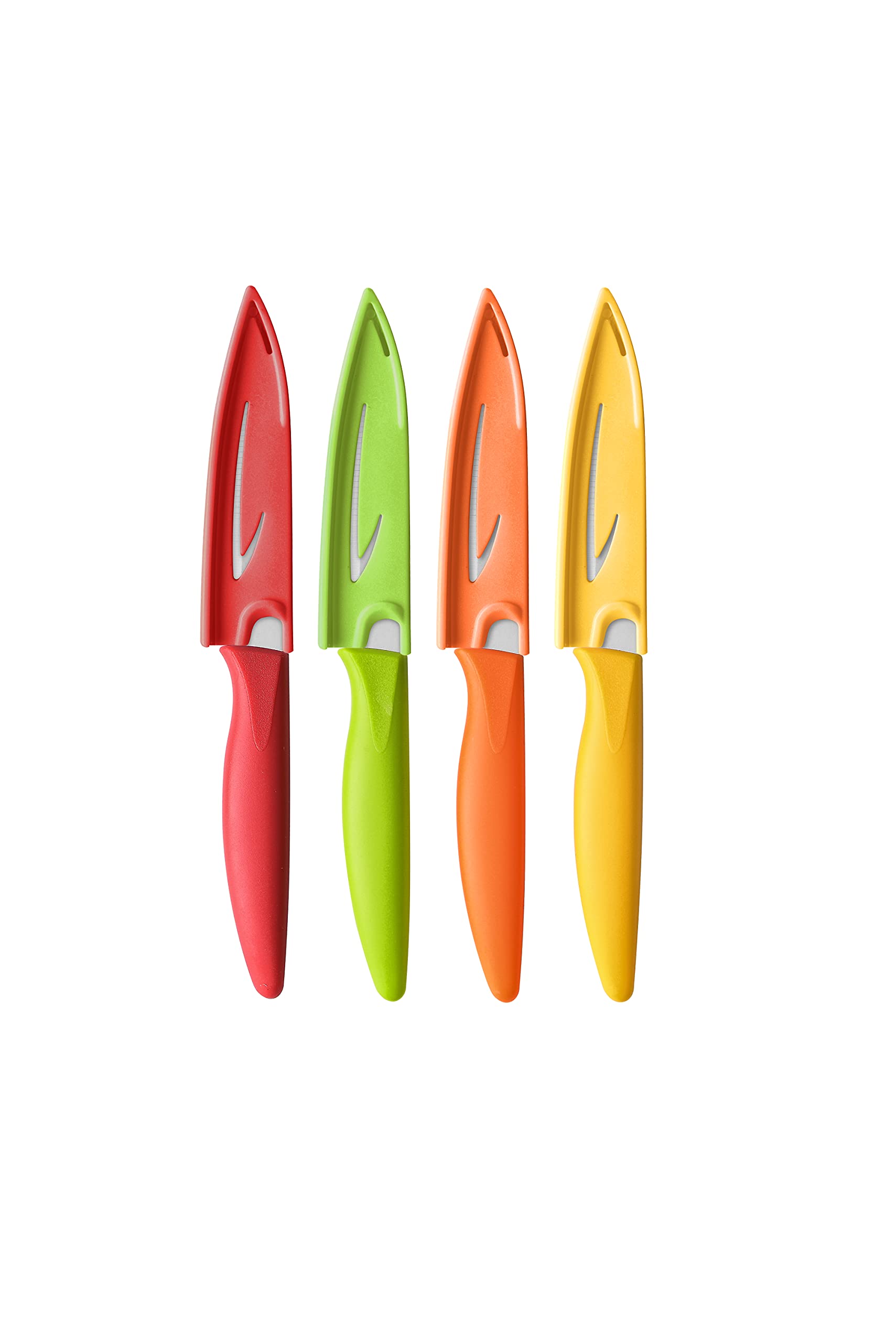
Wooden blocks look traditional but take up counter space and can harbor bacteria in the slots. The Astercook set includes individual blade guards — a smarter approach for drawer storage and travel. Some buyers prefer magnetic strips, but those require wall mounting.
Block quality varies wildly. Cheap blocks crack within months. Better ones have slots sized for each specific knife, not generic openings that let blades rattle around.
Maintenance Requirements
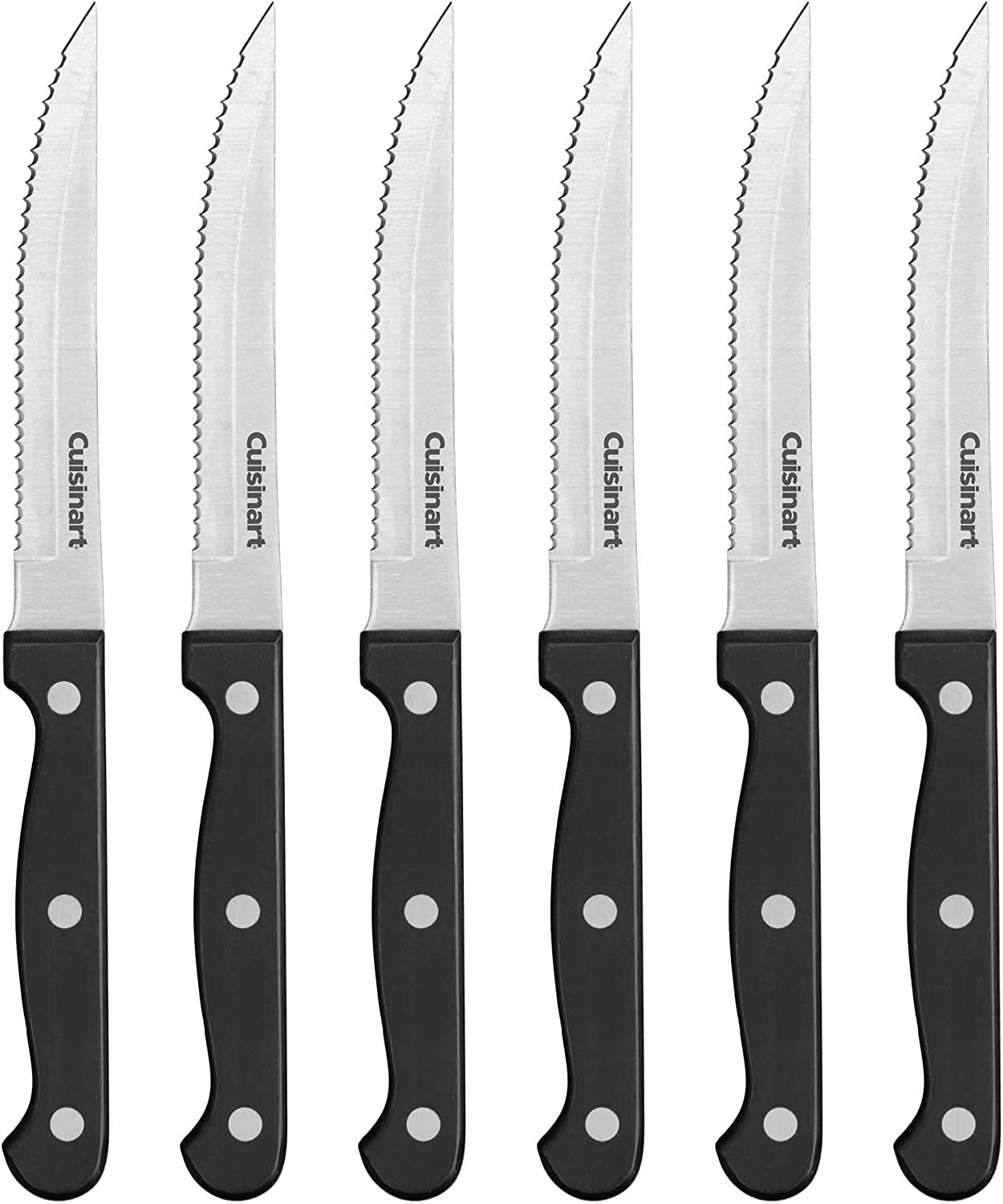
Dishwasher-safe sounds convenient, but hand washing extends blade life significantly. High heat and harsh detergents dull edges faster. Sets marketed as "dishwasher safe" (like Amorston steak knives) can handle occasional machine washing but shouldn't live there.
Sharpening requirements depend on steel quality and usage. Budget sets need sharpening every few months with regular use. Better steel holds an edge for 6-12 months. Many sets include a sharpening steel, but most home cooks are better off with a simple pull-through sharpener.
Warranty and Brand Support
Lifetime warranties sound impressive but read the fine print. Astercook and Amorston both offer lifetime coverage, but it typically covers manufacturing defects, not normal wear or damage from misuse. Cuisinart backs their sets with a lifetime warranty and has established customer service — worth considering if you want long-term support.
Price Ranges
The knife set market breaks into three clear tiers, each serving different needs and budgets.
Budget ($12-30): Sets like the Amazon Basics 14-piece at $24 deliver surprising value. You get decent steel, full tang construction, and all the essential knives. The handles feel basic and the block is simple pine, but the cutting performance rivals sets costing three times more. These work great for occasional cooks or first apartments.
Mid-range ($50-120): This is the sweet spot for serious home cooks. The Cuisinart 15-piece at $90 represents this tier well — forged blades, better balance, and a warranty you can actually use. Build quality jumps significantly here. Handles feel more substantial and blocks use better wood. You're paying for durability and refinement, not just cutting ability.
Premium ($200-388): High-end sets target knife enthusiasts and professional-grade home kitchens. At this level, you're paying for premium steel alloys, hand-finished edges, and exotic handle materials. The performance gain over mid-range sets is marginal for most cooking tasks. Only consider this tier if you cook daily and appreciate the craftsmanship.
Common Mistakes
Buying too many knives: That 20-piece set looks impressive but you'll use maybe six knives regularly. The Astercook 13-piece at $18 includes the essentials without filler knives that just take up space.
Ignoring storage needs: Measure your counter space before buying a block set. Many buyers end up shoving oversized blocks into corners or cramped areas where they're hard to access.
Focusing only on blade count: A quality 8-piece set outperforms a mediocre 16-piece collection. The Amorston 8-piece steak knife set gets higher ratings than many full kitchen sets because it does one thing extremely well.
Skipping the basics for specialty knives: Buyers get excited about santoku or utility knives but neglect the fundamentals. Master the chef's knife first — it handles 70% of cutting tasks.
Expecting dishwasher durability: Even "dishwasher safe" knives last longer with hand washing. The convenience isn't worth replacing your set every two years.
Our Recommendations
For specific product recommendations across different budgets and use cases, check our detailed knife set rankings and reviews. We break down the top performers in each price category and highlight the best value picks.
FAQ
How many knives do I actually need? Four knives handle 90% of kitchen tasks: 8-inch chef's knife, 3.5-inch paring knife, serrated bread knife, and utility knife. Everything else is convenience, not necessity.
Are expensive knife sets worth it? For most home cooks, no. Sets over $150 offer diminishing returns unless you cook professionally or are passionate about knives. The $50-100 range delivers the best balance of quality and value.
Should I buy a set or individual knives? Sets offer better value if you need multiple knives and storage. Individual knives make sense if you only need one or two specific pieces, or want to mix brands.
How often should I sharpen my knives? Depends on usage and steel quality. Budget sets need sharpening every 2-3 months with regular use. Better steel can go 6-12 months. A sharp knife is safer than a dull one.
Can I put knife sets in the dishwasher? Many are labeled dishwasher safe, but hand washing extends blade life significantly. High heat and harsh detergents dull edges faster than normal use.
What's the difference between forged and stamped blades? Forged blades are hammered from heated steel, creating denser metal and better balance. Stamped blades are cut from steel sheets — lighter and cheaper but can perform just as well for home cooking.
Do I need a knife block? Not necessarily. Blade guards, magnetic strips, or drawer inserts work just as well and save counter space. Blocks are convenient but not essential for knife care.