Cookware sets are everywhere, from $8 disposable aluminum pans to $1,000 All-Clad collections. We tracked 43 sets across three months to cut through the marketing noise. Most buyers overthink materials and underthink sizing. Here's what actually drives performance and value.
What to Look for in Cookware Sets
Material Construction
The material determines how your cookware heats, cleans, and lasts. Aluminum dominates the budget space because it conducts heat well and costs little to manufacture. Stainless steel offers durability but heats unevenly without an aluminum or copper core. Hard anodized aluminum splits the difference — better than basic aluminum, cheaper than quality stainless.
Nonstick coatings appear on most sets under $100. They make cooking and cleanup easier but wear out in 2-3 years with regular use. PTFE (Teflon) remains the most common coating, despite PFOA concerns that manufacturers have largely addressed. Ceramic nonstick sounds healthier but typically performs worse and chips more easily.
Watch for marketing terms like "granite" or "diamond" coatings — these are usually standard nonstick with mineral particles added for texture, not performance.
Piece Count vs. Actual Value
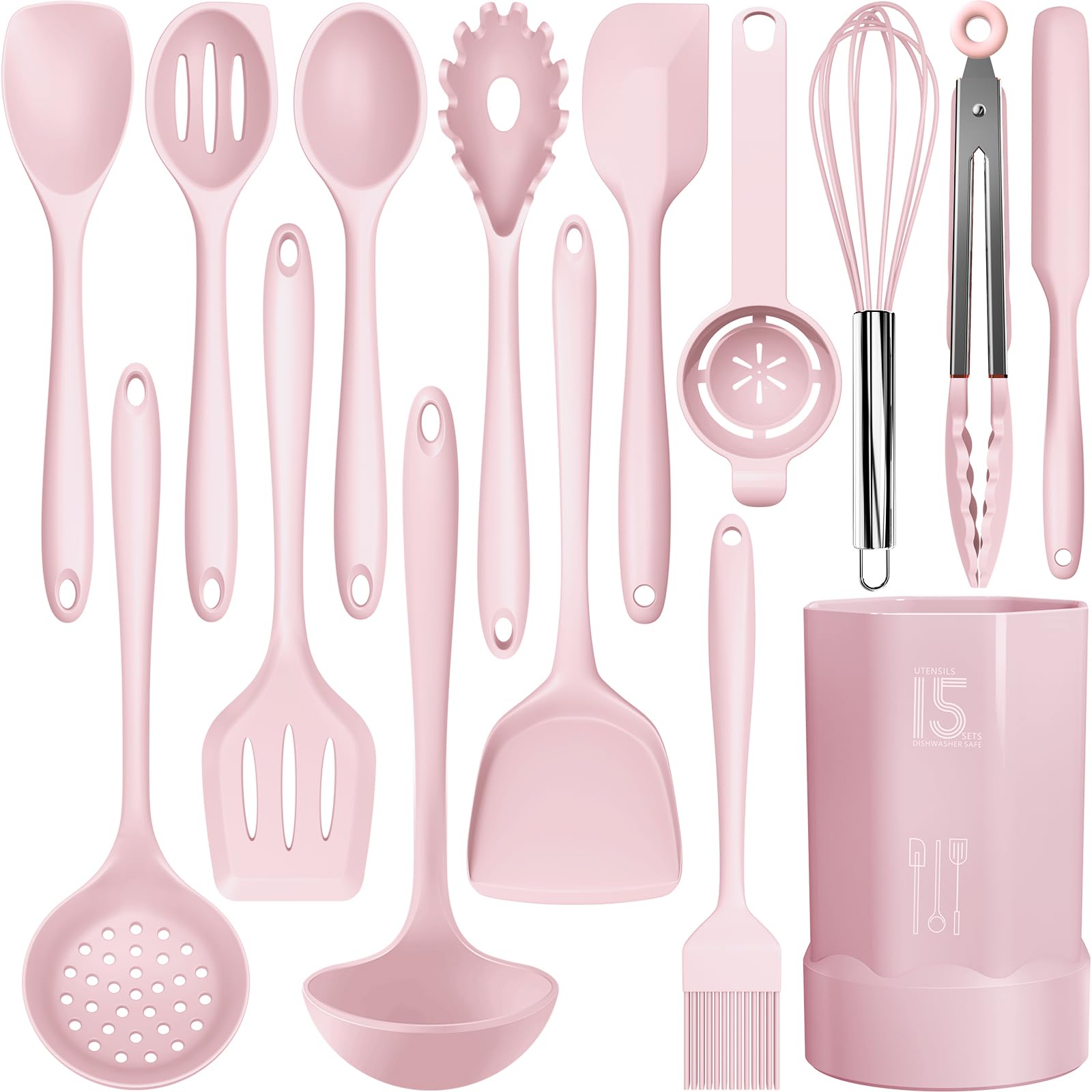
Manufacturers inflate piece counts by including lids, trivets, and utensils. A "21-piece set" might contain just 6 actual pots and pans. The Astercook 21-piece set includes measuring cups and silicone accessories to reach that number — you're paying for bulk, not cooking capability.
Focus on the core pieces: two frying pans (8" and 10"), a saucepan, a stockpot, and a sauté pan cover most cooking tasks. Everything else is nice-to-have.
Handle Design and Attachment
Handles fail before cookware bodies do. Riveted handles last longest but create cleaning challenges around the attachment points. Welded handles look cleaner but can separate under stress. Some newer sets use detachable handles for storage — clever for small kitchens but adds complexity.
Stay-cool handles matter more than most buyers realize. Bakelite and silicone grips work well, but cheap plastic handles soften and crack over time.
Heat Distribution and Compatibility
Thin aluminum bottoms create hot spots that burn food. Look for bases at least 3mm thick, or multi-layer construction that sandwiches aluminum between steel layers. The All-Clad D5 uses five-ply construction for even heating, but you'll pay $1,000 for that precision.
Induction compatibility requires magnetic materials in the base. Most stainless steel works, but aluminum needs a steel disc added to the bottom. Check the specs — "induction ready" should be clearly stated.
Size Proportions
Most sets include similar-sized pieces that overlap in function. Two frying pans at 8" and 10" make sense. Three saucepans at 1.5, 2, and 2.5 quarts don't — you'll use one regularly and ignore the others.
Better sets space their sizes more logically: small saucepan (1.5 qt), large saucepan (3 qt), stockpot (6-8 qt). This covers single servings to family meals without redundancy.
Oven and Dishwasher Safety
Oven-safe temperatures vary wildly. Basic nonstick handles melt around 350°F, while quality stainless steel handles survive 500°F+. If you plan to finish dishes in the oven or broiler, this matters.
Dishwasher safety sounds convenient but hand-washing extends nonstick coating life significantly. Most manufacturers void warranties for dishwasher damage to nonstick surfaces.
Cookware Set Price Ranges
Budget ($8-50): Basic aluminum with thin nonstick coatings. The 16PCS set at $50 represents this tier — adequate for light cooking but expect coating wear within a year. Handles stay cool poorly and pieces warp on high heat. Fine for college apartments or vacation rentals.
Mid-range ($50-200): Thicker construction, better nonstick, improved handles. The Amazon Basics 8-piece at $45 offers solid value here — 28,000+ reviews average 4.4 stars for good reason. Coatings last 2-3 years with care. Most buyers should shop this range.
Premium ($200-1000+): Professional-grade materials, lifetime warranties, made in USA/Europe. The All-Clad D5 at $1,000 targets serious cooks who want heirloom quality. Even heating, no hot spots, handles that never loosen. Worth it if you cook daily and plan to keep the set 20+ years.
Common Cookware Set Buying Mistakes
Buying for piece count instead of utility: That 23-piece set includes measuring spoons and trivets you don't need. Six quality pieces beat 20 mediocre ones.
Ignoring stovetop compatibility: Induction cooktops require magnetic bases. Glass-top stoves scratch easily with rough-bottom pans. Gas works with everything but heats unevenly with thin bases.
Expecting nonstick to last forever: Even premium nonstick coatings wear out. Budget for replacement every 2-4 years or choose uncoated stainless steel for permanence.
Mixing incompatible pieces: Buying individual pans to "complete" a set often creates size gaps or style mismatches. Start with a cohesive set, then add specialty pieces.
Overlooking storage space: Large sets look impressive but crowd cabinets. Measure your storage before buying. Stackable designs help but add bulk to individual pieces.
Cookware Set Recommendations
For specific product recommendations and detailed comparisons, check our best cookware sets roundup and budget cookware guide.