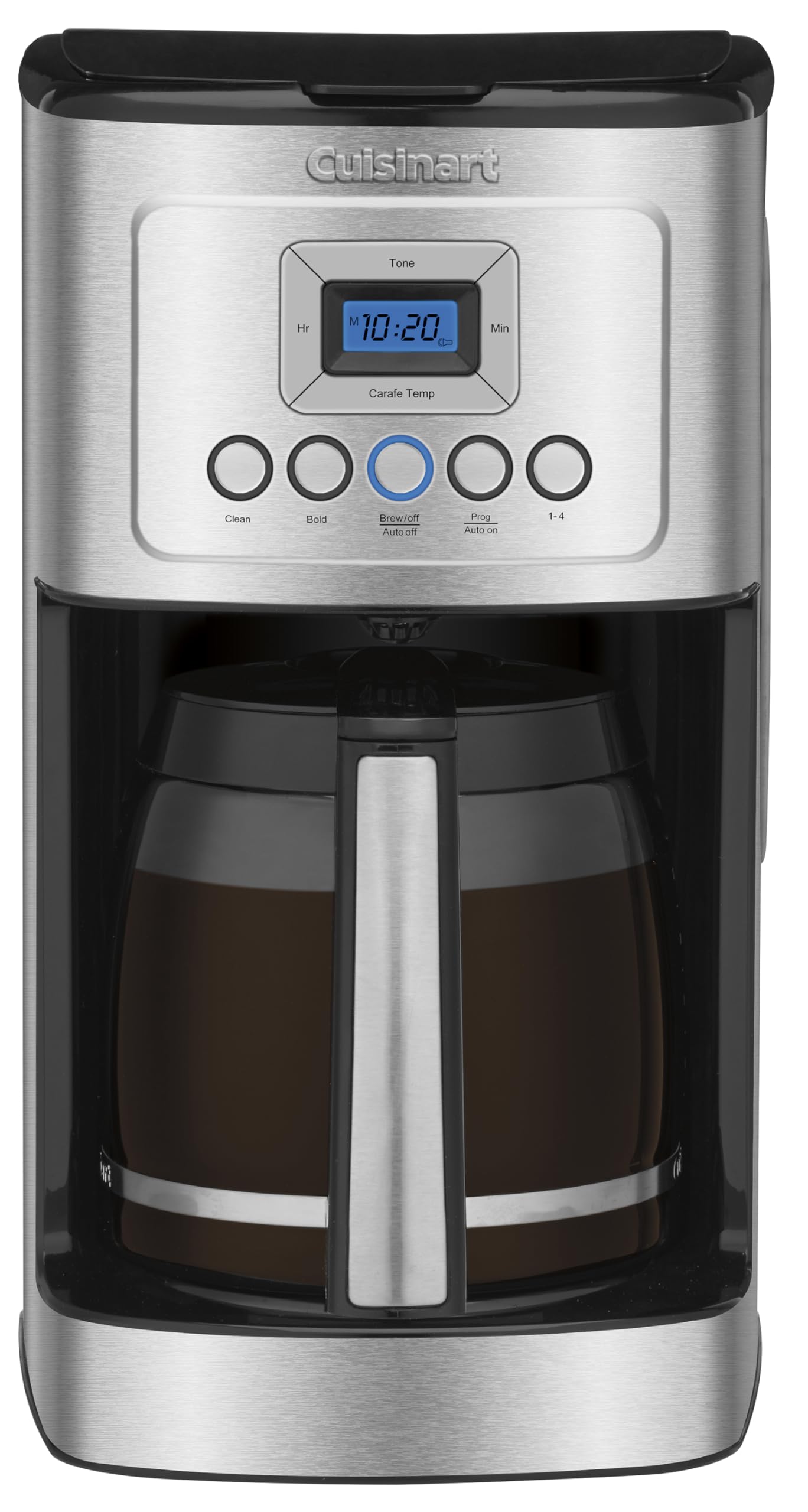
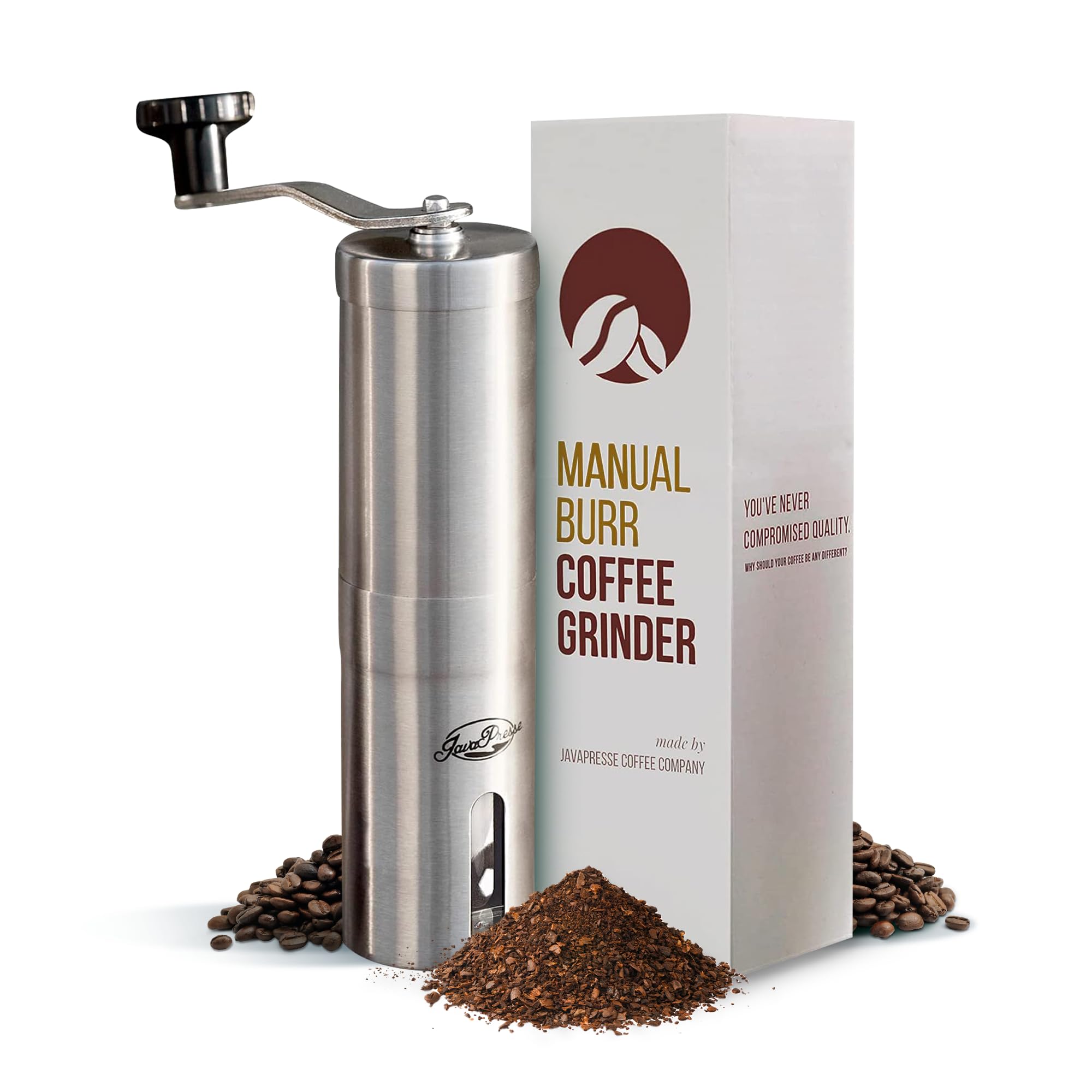
This isn't really an apples-to-apples comparison. The Cuisinart 14-Cup Programmable Coffee Maker brews your coffee automatically, while the JavaPresse Manual Coffee Grinder just grinds beans — you still need something else to actually make coffee. But we tracked both products because they represent two different philosophies: convenience versus control.
The Short Answer
Buy the Cuisinart if you want automated coffee brewing for multiple people. Buy the JavaPresse if you already have a brewing method and want freshly ground beans. They're solving different problems at different price points.
Price & Value
The Cuisinart sits around $90 right now — down from its $120 peak earlier this year. That's solid timing if you're buying, especially with the Big Spring Deal tag. The JavaPresse costs about $30, fluctuating between $30-39 over the past three months.
Value-wise, these products score differently. The JavaPresse gets an 8.7 value score — exceptional for what it delivers. The Cuisinart scores 4.7 on value, which tracks with most automatic coffee makers in this range. You're paying for convenience and capacity, not efficiency.
The price gap makes sense. One's a complete brewing system with programmable features, the other's a manual grinder that requires additional equipment to actually make coffee.
Ratings & Reviews
The Cuisinart edges ahead with 4.4 stars from over 43,000 reviews versus the JavaPresse's 4.1 stars from about 26,000 reviews. Both have substantial review bases, though the Cuisinart's getting more attention — 697 new reviews in 90 days compared to 75 for the JavaPresse.
Buyers praise the Cuisinart for consistent brewing and the programmable timer. Common complaints center on the plastic construction feeling cheap for the price and the carafe's tendency to drip. The JavaPresse gets consistent mentions for grind consistency and portability, but buyers frequently note the hand-cranking takes effort and time — especially for larger batches.
The Cuisinart's higher rating reflects its broader appeal, but the JavaPresse's dedicated user base seems more passionate about the grinding experience.
Key Differences
The fundamental difference is automation versus manual control. The Cuisinart handles everything — you add water and grounds, set the timer, and wake up to coffee. The JavaPresse requires you to hand-crank every batch, then use another device to actually brew.
Capacity matters too. The Cuisinart brews 14 cups (about 70 oz) in one cycle. The JavaPresse grinds enough for maybe 2-4 cups before your arm gets tired, according to buyer feedback.
Build quality takes different approaches. The Cuisinart uses mostly plastic construction with stainless steel accents. The JavaPresse features a ceramic burr mechanism in a compact stainless steel body. Both feel appropriate for their price points, but neither screams premium.
Specifications
| Feature | Cuisinart DCC-3200P1 | JavaPresse Manual Grinder |
|---|---|---|
| Price | ~$90 | ~$30 |
| Capacity | 14 cups (70 oz) | Single serving batches |
| Power | Electric, programmable | Manual hand crank |
| Weight | 4.1 kg | 0.3 kg |
| Grind Settings | N/A (uses pre-ground) | 18 adjustable settings |
| Material | Plastic/Stainless | Stainless Steel/Ceramic |
| Portability | Countertop only | Fully portable |
The specs highlight how different these products are. The Cuisinart's a kitchen appliance that stays put. The JavaPresse travels anywhere and needs no power source.
Our Recommendation
Buy the Cuisinart if you want automated coffee for multiple people, value convenience over grind quality, or need programmable brewing for busy mornings.
Buy the JavaPresse if you already have a brewing method (pour-over, French press, etc.), want control over grind consistency, or need portable grinding for travel or camping.
Most people choosing between these probably need the Cuisinart — it's a complete solution. The JavaPresse appeals to coffee enthusiasts who understand that fresh grinding improves flavor but requires more involvement in the process.