Espresso machines stretch from around $100 to well past $1,500, which makes the category one of the most confusing on a kitchen countertop. We pulled the 8 machines we track for the espresso category, where the average price sits near $450 and ratings average 4.2 stars across roughly 110,000 reviews. The path to a good buy is not about finding the one best model. It is about three questions in order: what type of machine, whether the grinder should be built in, and how much you plan to spend. This guide walks through each in turn.
Espresso Machine Types Explained
There are three main types on the market, and they work in very different ways. Pod machines, like the Nespresso Vertuo Plus and Vertuo Next, use sealed capsules. Push a button, and a pre-measured puck of coffee gets pierced and pressurized. There is no grinding, no tamping, and no cleanup beyond tossing the capsule. Both Vertuo models we track sit under $170, which makes them the cheapest entry point into the category.
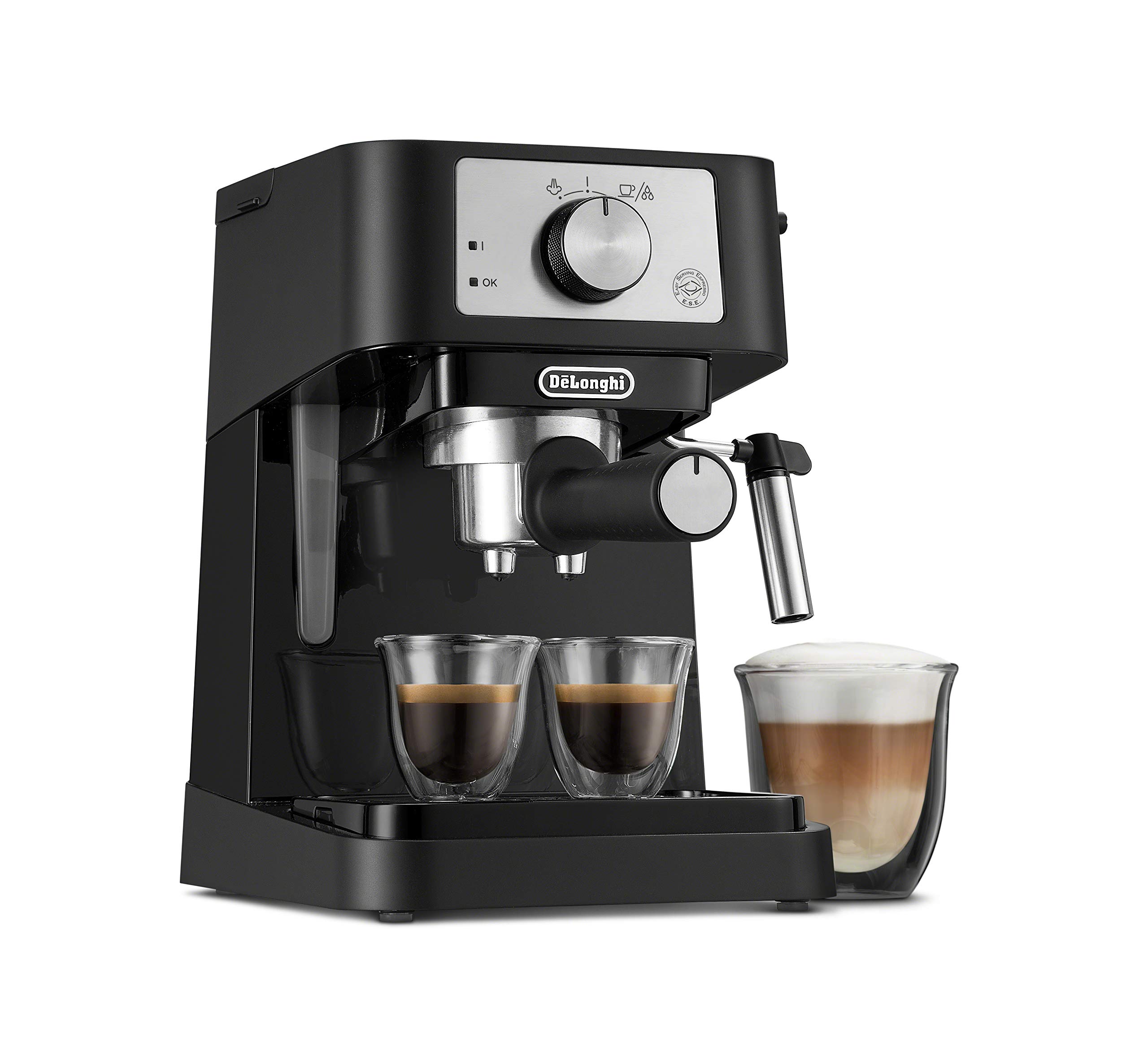
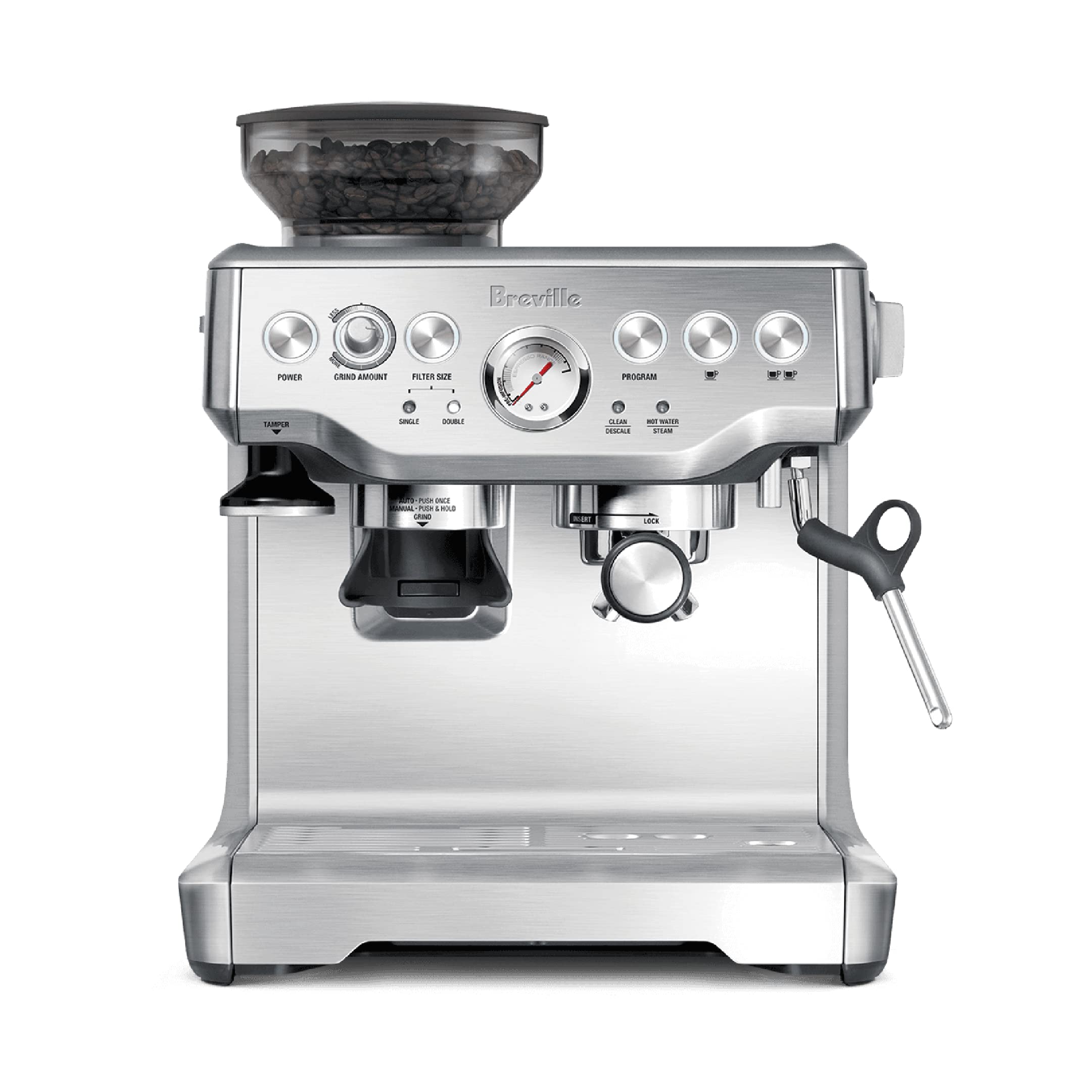
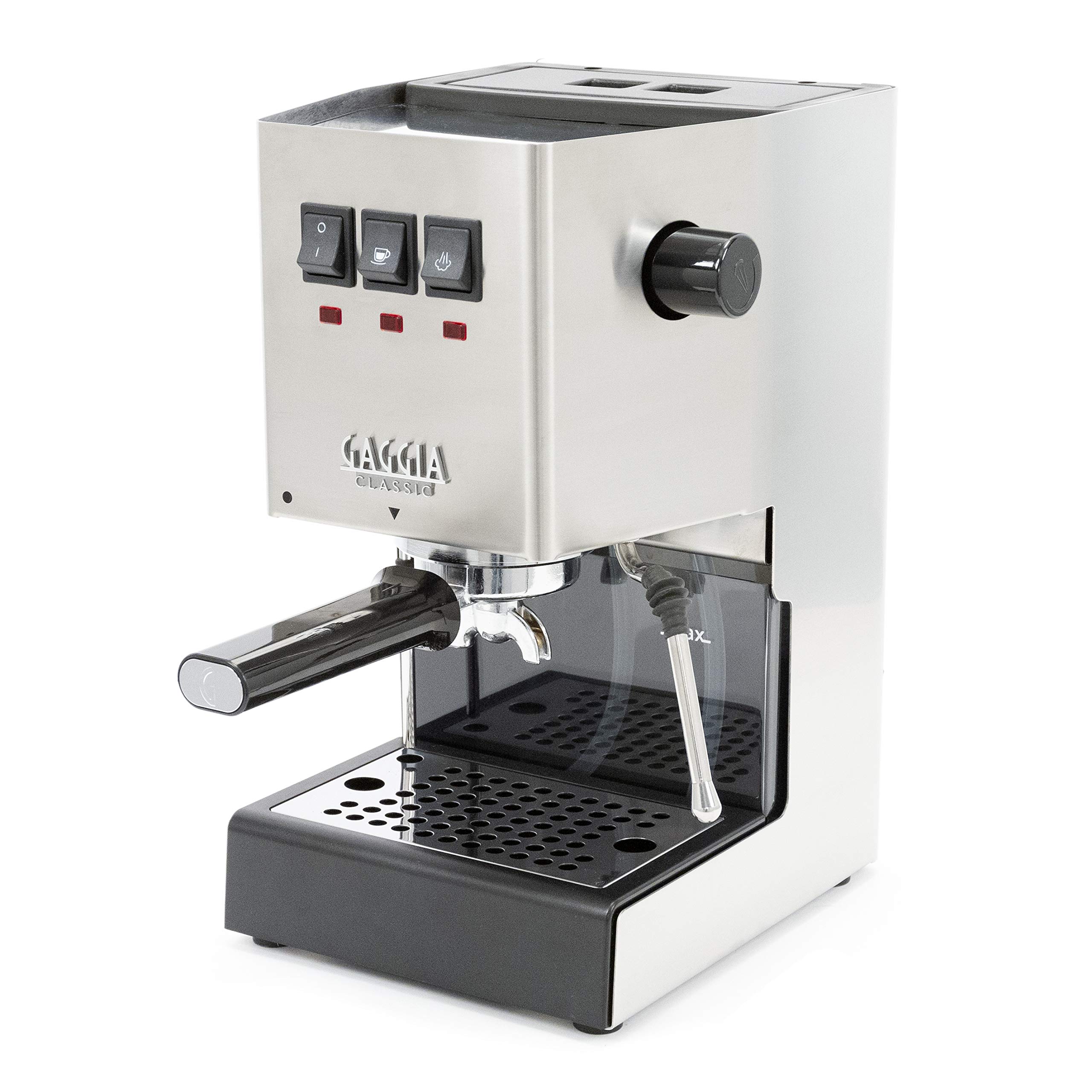
Then there is the manual semi-automatic. This is what most people picture when they think of espresso. You grind beans, dose the portafilter, tamp, lock it into the group head, and pull a shot. The De'Longhi Stilosa at around $100 is the entry-level version of this approach. The Breville Bambino Plus and the Gaggia Classic Evo Pro sit higher up, both in the $400 to $450 range. The Breville Barista Express takes the same semi-automatic idea and bolts a grinder onto the left side of the machine, which pushes it closer to $550.
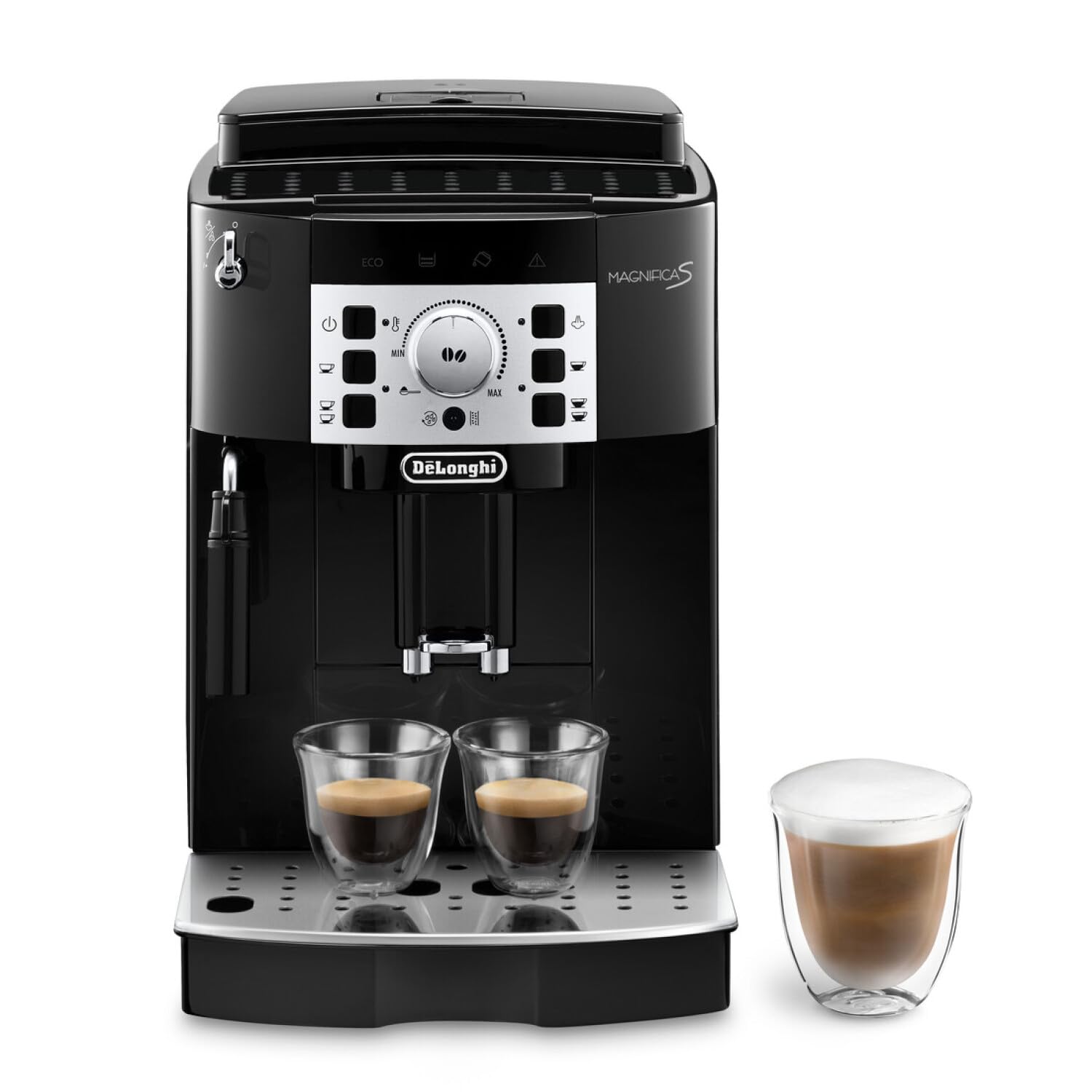
Finally, super-automatics handle nearly everything for you. The De'Longhi Magnifica S grinds, doses, tamps, and pulls at the push of a button, with a manual milk frother on the side. At around $600, it is the most expensive machine in our current espresso set, and also the one with the highest score in our data (above 8.5).
The buyer split is simple. Pod suits people who want a drink in 30 seconds with zero technique. Semi-autos suit people who want to learn the craft and tweak grind, dose, and shot time. Super-autos suit people who want real bean-to-cup coffee without ever touching a portafilter.
Should the Espresso Grinder Be Built In?
This is the decision that separates happy buyers from frustrated ones. A good shot of espresso depends more on the grind than on the machine pulling it. If you put pre-ground supermarket coffee through a $500 machine, the result will taste worse than freshly ground beans through a $150 one. Any real semi-automatic needs a grinder behind it. The question is whether that grinder lives inside the machine or next to it.
The Breville Barista Express is the most popular built-in answer. Beans go in the hopper on top, the burr grinder doses directly into the portafilter, and you can adjust grind size with a dial on the front. Buyers report this is the main reason they picked it, since it keeps the counter clean and the workflow fast. The De'Longhi Magnifica S takes the same idea further by also tamping and brewing for you.
The separate-grinder route looks like this: buy the Breville Bambino Plus or the Gaggia Classic Evo Pro, then pair it with a dedicated burr grinder in the $150 to $300 range. This is what most serious home baristas recommend, and the math often works out. A Bambino Plus at around $400 plus a $200 grinder still lands below the $550 Barista Express, and you get a better grinder than the one inside the Breville. The tradeoff is countertop space and one extra step in the morning.
One more note. The De'Longhi Stilosa at $100 has no grinder and no way to integrate one. If you buy it, budget for at least a hand grinder on top.
How Much to Spend on an Espresso Machine
Our espresso category data shows an average price near $450 and a median close to the same, with a spread from under $100 to almost $1,200. That spread breaks into three tiers worth thinking about.
Under $200 buys you a pod machine or the cheapest semi-auto on the market. The Nespresso Vertuo Plus at around $170, the Vertuo Next closer to $110, and the De'Longhi Stilosa at around $100 all fall here. None of these will give you cafe-grade espresso. The pod machines produce a pressurized extraction that looks like espresso but lacks the crema structure of a real shot. The Stilosa can pull a legitimate shot, but its plastic build, small boiler, and basic steam wand mean you will hit its limits fast.
The $200 to $500 range is where things get serious. The Breville Bambino Plus at around $400 and the Gaggia Classic Evo Pro at around $450 are the two machines most first-time buyers end up in. The Bambino Plus has an automatic milk frother and a compact footprint. The Gaggia has a commercial 58mm portafilter, Italian build, and a three-way solenoid valve that matters if you want to tweak extractions. Both score above 8 in our data.
Above $500 you get built-in grinder semi-autos like the Breville Barista Express at around $550 and super-autos like the De'Longhi Magnifica S at around $600. This is the tier to pick if you are buying once and keeping it for 5+ years. The Magnifica S scored 9 in our ranking with above 49,000 ratings at 4.3 stars, which is the strongest combined signal in the category.
What to Skip in the Espresso Category
We will take a stance here, since this is where most buyers waste money. Skip pod machines if you consider yourself a real espresso drinker. The Vertuo line produces decent coffee, but you are locked into Nespresso capsules, the shots are thin by espresso standards, and the per-cup cost over time is higher than bean-to-cup. If you drink 2 shots a day, a $170 Vertuo Plus will cost more in capsules over a year than it cost to buy.
Skip super-autos like the Magnifica S if you want to learn how espresso works. They are great machines, but they remove every variable you would use to improve your shot. You cannot adjust tamp pressure, you cannot change dose by a gram, and you cannot see what the puck looks like when it fails. For a hobbyist, that is the whole point.
Skip anything under $80 that calls itself an espresso machine. These typically hit 4 bars of pressure instead of the 9 bars needed for real extraction. They produce strong coffee, not espresso. None of them appear in our tracked set for good reason.
Also watch for machines without a proper steam wand. If milk drinks are part of your plan (lattes, cappuccinos, flat whites), you need a steam wand that can texture milk, not just heat it. The Bambino Plus handles this automatically. The Stilosa has a manual wand that works but takes practice. Pod machines mostly lack any real milk texturing.
Common Espresso Machine Buyer Mistakes
The most common mistake we see across buyer reviews is forgetting to budget for a grinder. Someone spends $400 on a Bambino Plus, then realizes their $30 blade grinder produces inconsistent grounds, and their shots taste bitter or sour. A proper burr grinder adds $150 to $300 to the total, and that is not optional if you want the machine to perform.
The second mistake is picking a pod machine to save money, then drinking 4+ cups a day. Vertuo capsules run roughly $1 each. Over a year, a heavy drinker spends more on pods than the cost of a Bambino Plus and a grinder combined. The savings disappear fast.
Third, buyers sometimes overspend on the Barista Express when a Bambino Plus plus a separate grinder would serve them better. The Barista Express is a strong machine, but its built-in grinder is average compared to a dedicated one at the same price, and the all-in-one design takes up more counter space than the smaller Bambino Plus. If you have a cramped counter, the Barista Express loses on footprint. If you want grinder quality for the same budget, the split setup wins.
Finally, first-time buyers underestimate the learning curve on manual machines. Pulling a good shot takes weeks of practice, not one afternoon. Buyers who expected cafe results on day one tend to leave 2-star reviews. Buyers who stuck with it past the first month report their shots got noticeably better around weeks 3 to 4.